OPL Foca PF2B
OPL Foca family list
OPL Foca PF1
OPL Foca PF2
OPL Foca Universel
OPL Focaflex
OPL Foca PF2B
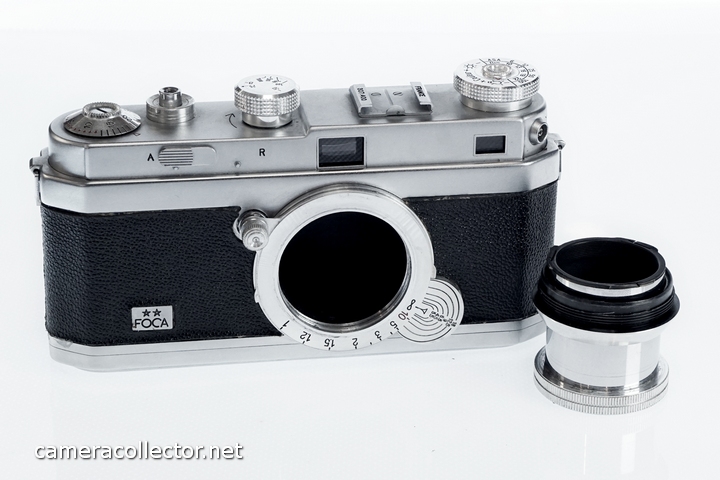
The Foca PF2 cameras were made in two generations: the 1945 Foca PF2 and the 1947 Foca PF2B, which is described on this page. Both models had their own sub-versions. The main differences between the PF2 and PF2B are the PF2B’s higher top speed of 1000, a smaller speed selector dial, and the addition of flash sync. Variants across both generations include the location of the serial number, whether the ‘FOCA ★★’ shield is engraved or printed, and different styles of the rewind knob memo. I would suggest that for the casual collector, such variants are meaningless, while Foca connoisseurs may consult the numerous links on the main OPL page. Further to the above models, the PF2B had a model used by the French Navy, marked Marine Nationale on the nameplate rather than the stars. As with the FED/Zorky early models disguised and sold as Leicas, most Marine Nationale cameras offered today are fakes. The authentication key is the serial number, which should be up to 3 digits.
Note that the links on the main Foca page could point to many more subversions that are not catalogued and are either factory whims or transitional models.
A later model, the Foca PF3, is the same as the PF2, but with an added slow-speed dial. The manual referred to is for the PF3, but can be safely used for the PF2.
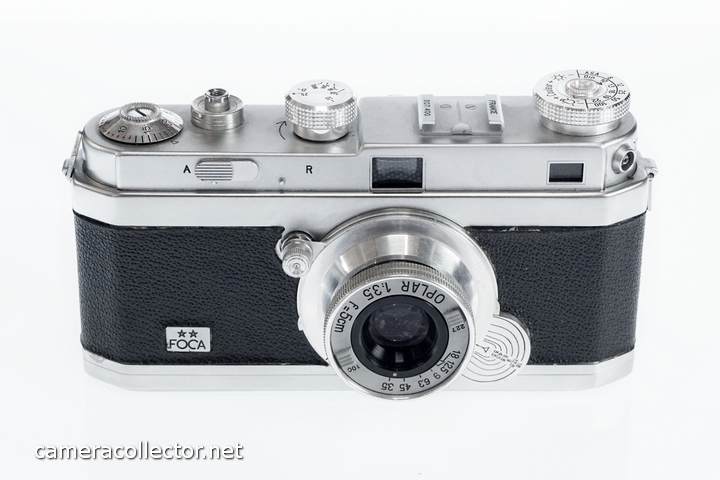
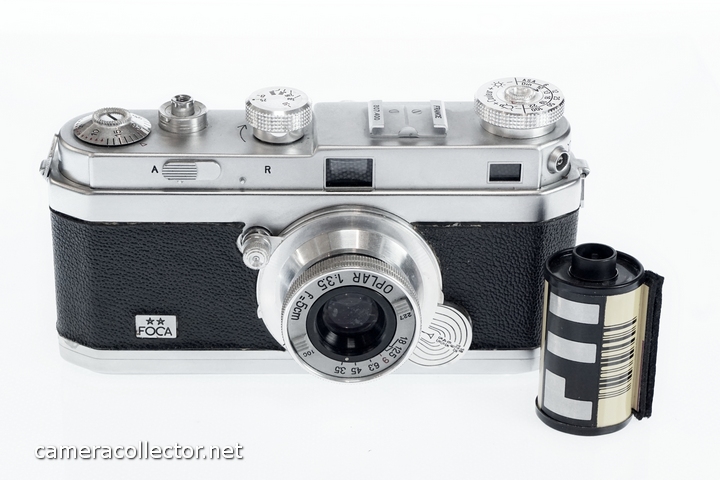
The Foca PF2 was the first on this line, followed by the PF1 and the Universel models. As the rest of the early, all-metal Focas, this model is very well made, a pleasure to look at and a delight to handle. The camera on the bench is just a shade shy of being immaculate; for a 79-year-old camera, it is a true badge of honour. The design is not perfect, but it is very close. One way to judge a camera is whether it takes to read the manual first; here it passes with flying colours. Other than one feature, the rest is self-explanatory. It shares two features with another French camera of the same year, the Gallus Derlux; both have a curtain shutter, and shutter cocking is by the speed selector.
The finishes on my camera are as good as new, no rust, brassing or oxidation on the steel parts. The skin is intact, with minor lifting at the corners. All mechanical parts function well, which is either evidence of the manufacturer’s ability or of the early owner’s care.
- The body is entirely metal, with steel and aluminum parts, yet it is some 20% lighter than other cameras in its class. It is a tad smaller than high-end German or Japanese cameras and comfortably fits in the hand.
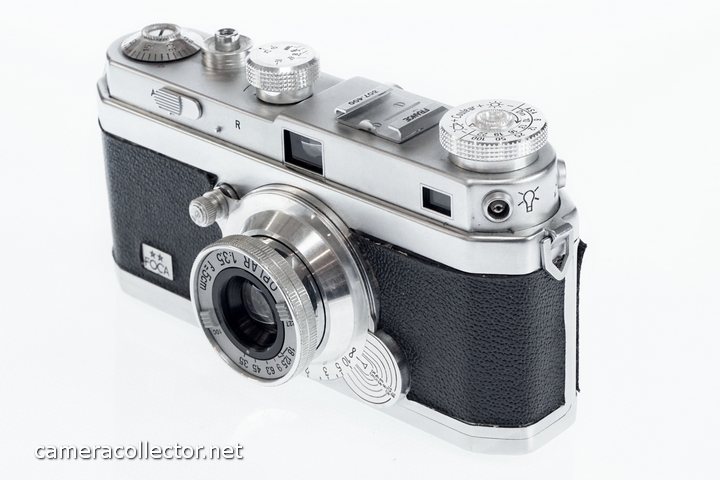
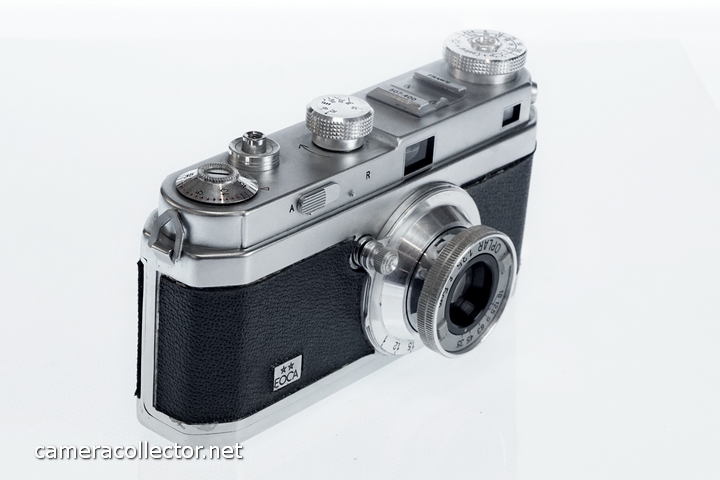
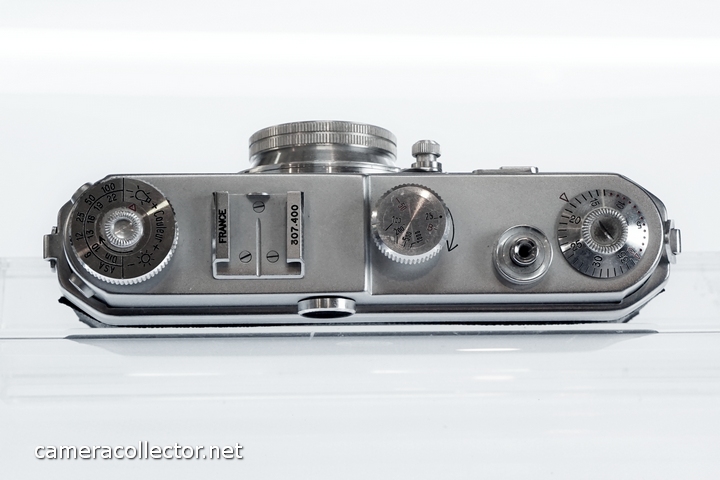
- The top, from left, has the frame counter, manual reset, the trigger nearby, the speed selector that doubles as the shutter cocking dial, and the rewind knob with a film type memo on it. A personal note from a tool maker’s view, the machining is flawless, where the speed selector is perfectly machined to fit around its base. I have never seen such precision work on a camera before.
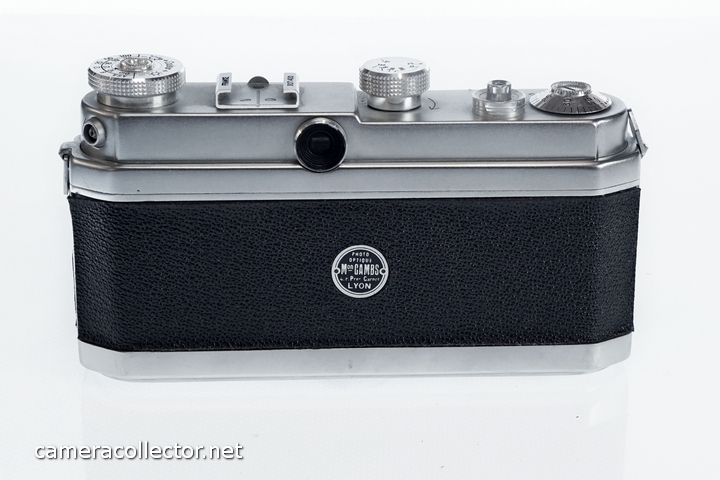
- The back has the viewer window, which is the only feature I would have corrected. It is just off the middle. I prefer the viewers offset to the left. Further, the viewer is tiny and borders on impracticality, but so were most French cameras of the era.
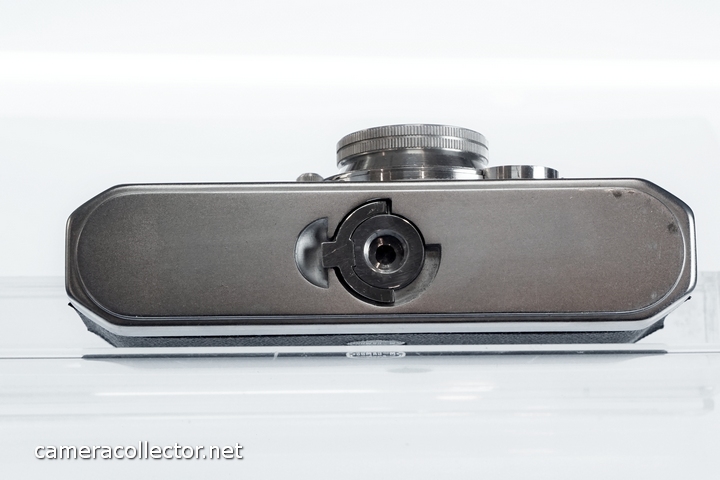
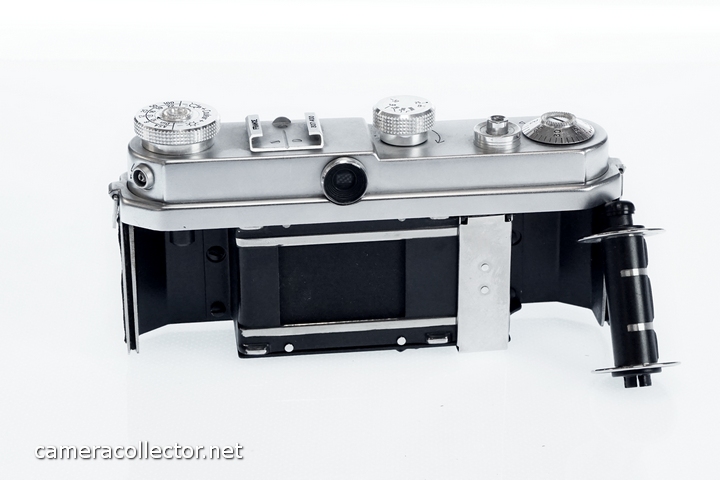
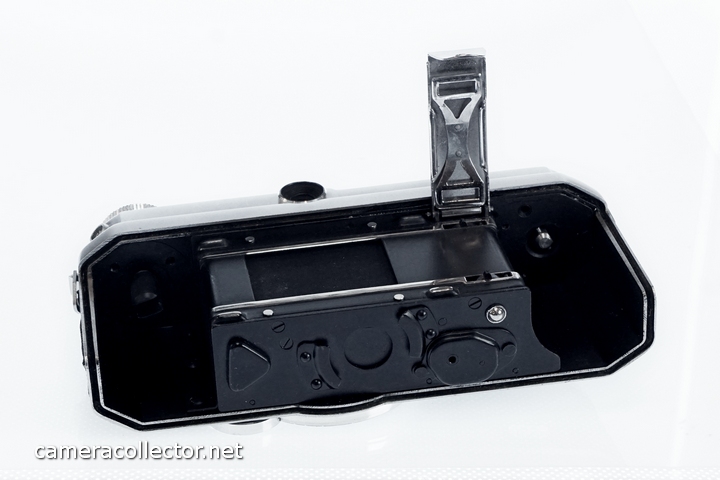
- The back is fully removable, a fresh change from the bottom-loading Leica-style models. It easily opens via a turmbuckle at the bottom.
- Inside are easy-to-reach film bays with a specialized takeoff spool. A standard spool can be easily modified to fit. Top and bottom polished film guides, and two feeder sprockets under a fold-down leaf that keeps the film well-behaved. A pressure plate is mounted on the back, next to a warning not to cock the shutter when the camera is not in use. The curtain shutter is much more ferocious than the same on other cameras, both in sound and in punch; it clanks like a train crash. I’m unsure if it is meant to be this way or needs adjustment.
- The front differs from the run-of-the-mill compatible cameras.
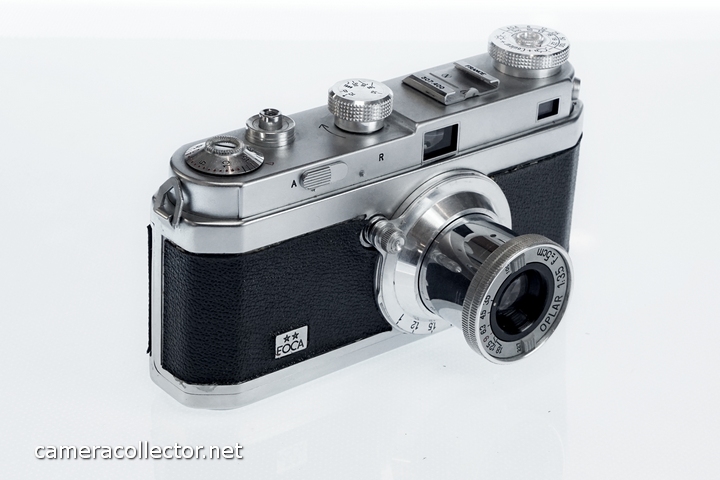
- On top, in line with the viewer windows, a lever is marked A for Avant – forwards, and R for Rebobinage – rewinding. The manual reads that it is also used as a safety catch.
- The lens assembly is mounted within a focusing ring, with the distance values, marked in meters, inverted. The markings are at the bottom, so you have to hold the camera facing up to see them. A finger rest guides the ring, with a knob that locks onto a pin on the body at infinity, and takes a press to release. This is the only feature that I could not decipher. The reason is that the rangefinder is calibrated for a 50mm lens, so if using another lens, the ring should be locked to infinity and distance compensated accordingly.
- The aperture setting ring ir at the front of the lens barrel, adjusted by two protruding tabs. Watch for the gingers not to slip onto the lens.
- A depth-of-field table is at five o’clock front and is an eyesore.
- The removable lens is mounted on a 36mm thread. I think I’ve only seen it on Foca. Further, it is retractable; pull it out and lock it in place with a slight right turn. When recessed, it turns freely with no locked position.
For collectors, it is highly recommended. If it had a Leica nametag, it would have been worth thousands. It is as close to perfection as a camera could be. They are not cheap, yet they are less than half the price of a compatible Leica. I cannot have enough of it, so if you come across one, buy it.
| Camdex list number | 17315 |
| Brand | OPL |
| Model | Foca PF2B |
| Manual | Foca 3 page |
| Value | Foca PF2 Foca PF2B Foca PF2B Marine National |
| Format | 35mm |
| Introduced | 1945 |
| AKA | |
| Country | France |
| Qty made | |
| Initial price | |
| Currency | |
| Type | Rangefinder |
| Body material | Metal |
| Mode | Manual |
| Weight | 520 gr, Body with lens |
| Class average weight | 640 gr, Body with lens |
| ASA range | Memo only |
| Kit lens | 3.5/50 |
| Lens make | Oplar |
| Filter size | Slide on |
| Lens mount | Thread |
| Mount size | 36mm |
| Aperture | |
| Shutter | Focal plane cloth horizontal |
| Shutter make | OPL |
| Trigger | On top |
| Winder | By speed selector |
| Shutter cocking | By speed selector |
| Light meter | No |
| Lock | No |
| Speeds | B, 25-1000 |
| Mirror | N/A |
| Viewer | Coupled rangefinder |
| DOF preview | No |
| Exposure lock | No |
| Exposure compensation | No |
| Shoe | Cold |
| External sync | X/M |
| Sync speed | 50 |
| Timer | No |
| Battery, original | N/A |
| Battery, replacement | N/A |
| Battery voltage | N/A |
| Integral flash | None |
| Other | |
| More | See links on main Foca page |
| Service / repair links | See camerlog.com |
Note that the specs above are taken from the camera on my bench. Cameras under the same model could have different lenses or shutter assemblies, or other minor differences.