OPL Focaflex
OPL Foca family list
OPL Foca PF1
OPL Foca PF2
OPL Foca Universel
OPL Focaflex
OPL Focaflex
The time is mid-last century. The war ended a decade ago, and Europe is in a rebuilding mode. The middle class is recovering, and the art of photography is no longer the domain of artists and technocrats. The 35mm format is used by all camera makers, with SLR cameras being used by hobbyists and professionals alike. Germany, East and West, the USSR, the UK, Italy, Switzerland, and Japan all offer 35mm compact SLR cameras. Even China is in the game. Two nations are still looking in from the outside, the US and France. The US was never a meaningful player in compact cameras making and had relied on imports. France was about to step in.
Three French camera makers offered 35mm compact SLR cameras.
The first was Couffin, an obscure manufacturer of whom little is known; they presented the elusive Malik Reflex. The company name translates to ‘Bassinet’ in English, so I wonder about its roots. Couffin was known to make photography accessories, and, aside from this model, sold two other cameras made by Leidolf.
The second was Sito-Royer, a short-lived camera maker that vanished within a decade and a half of inception, with an ambitious product line that reality did not catch up with. The Savoyflex models lasted only three years before the company shut down.
The third company was OPL, which I believe was the finest camera maker France had ever offered, the subject of this page.
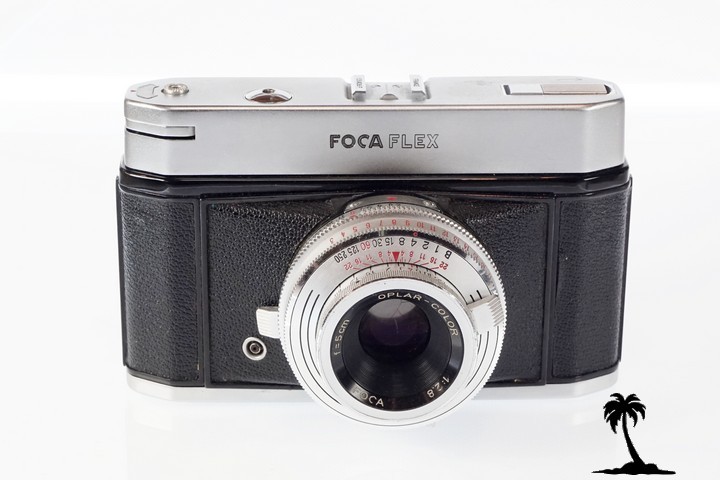
The OPL Focaflex is a unique camera that did not subscribe to the common compact SLR conventions. It was better made than most cameras, with French industrial flair and exquisite craftsmanship. I have seen many, I mean many, cameras, and this model stands head and shoulders above the others, as do the rest of the OPL products.
There were three Focaflex models:
- Focaflex, 1959, described here.
- Focaflex Automatic, 1961, similar to the first, with a selenium meter.
- Focaflex II, as the first, but with an interchangeable lens system and top speed of 300.
Although the early Foca PF series used a focal-plane-curtain shutter, the three Focaflex models used leaf shutters. A fourth model using a focal-plane shutter was in the works but did not mature into production.
In making this camera, it seems the designers studied other SLR models, thoroughly analyzed them, took notes, and did the opposite. It is a true SLR that preceded the similarly styled Pen F by four years. The camera lines much resemble the Werra, another favourite of mine, although not as clean and compact as the Werra.
As the Pen and the Werra, the Focaflex is a pleasure to hold. The camera on my bench is perfect, clean as if it just came off the line, not a blemish, rust or brassing. Skin is all intact, which is way better than most of the era cameras, let alone the East Block models, where skin peels out just as you look at it. Mechanical, it clicks, buzzes and hums as an eager kid goat, all functions. Even the self-timer, which I do not check because it is the first feature to fail, works here, though it needs some encouragement.
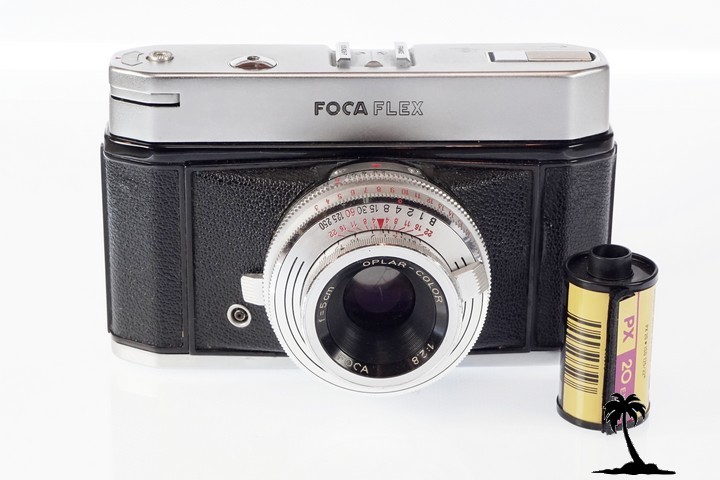
The camera is bulky and heavy, am not sure about the two other sister models. It is not a camera to carry around for casual photography. However, it passes the ‘no manual needed’ test, meaning it is intuitive to use. There is no indication of how many units were made, but judging from the scant information online and in print, it was not highly popular.
Most SLR models used a focal-plane shutter, which allowed room for the mirror to swing. Some models, the Contaflex comes to mind, used a mid-body leaf shutter, still allowing for interchangeable lenses. This model features a fixed-lens shutter, while the Focaflex II adds an interchangeable lens.
The principle
The main difference between the Focaflex and the rest of the SLR models is in the optics. Common to other models was the use of a pentaprism to deflect the beam from the mirror to the user’s eye. Alternatively, the camera could have a waist-level viewer, eliminating the need for a prism. Still, the viewer and the pentaprism hump typically indicated the SLR camera type. In a pentaprism camera, the mirror is down in the preview position. To shoot, the mirror swings up so the beam is directed to the focal plane.
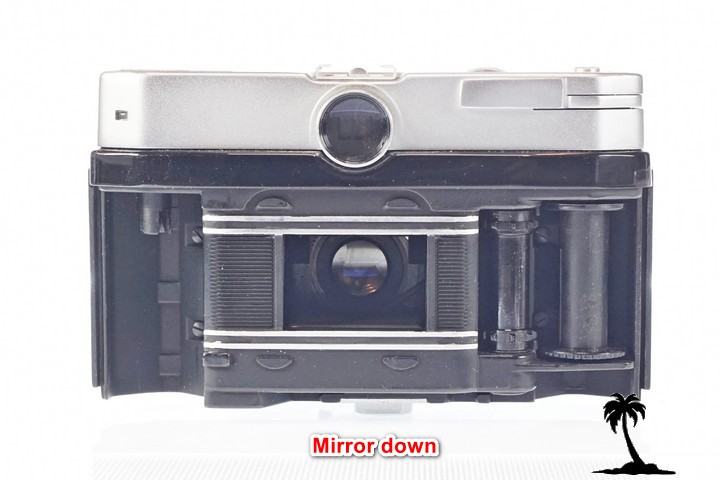
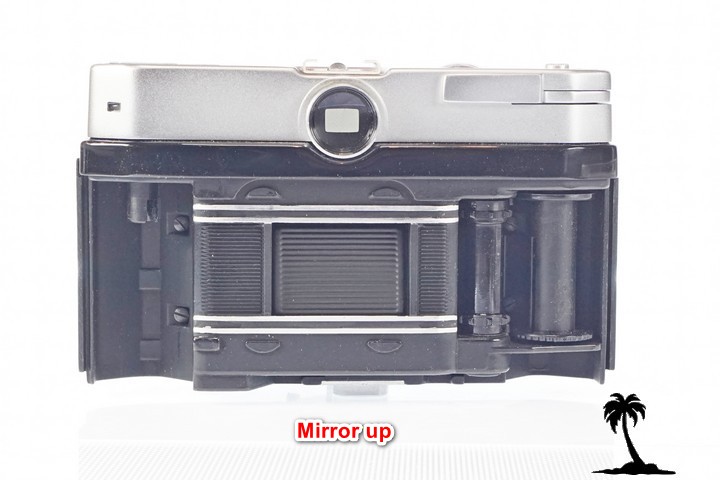
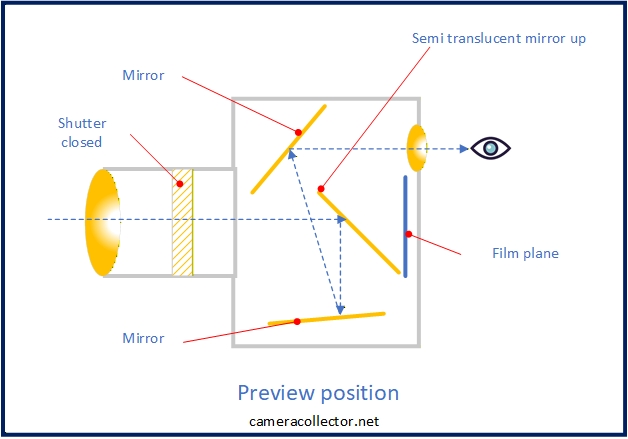
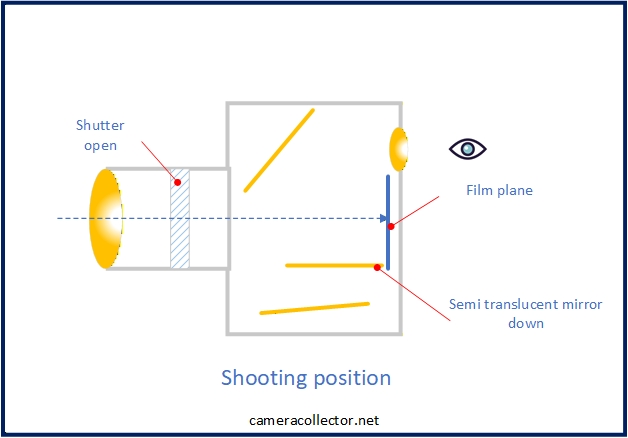
In the Focaflex, there is no prism, but a set of mirrors. Upon winding, a semi-translucent mirror flips up against the lens, think Canon Pelix. The beam is reflected through the semi-translucent surface, hitting it at an angle, then passes through to the top-mounted mirror, which deflects it to the user’s eye. With the trigger pressed, the mirror drops down, directing the beam to the focal plane. The action is similar to a common SLR mirror: it flips down, out of the way for shooting, rather than flipping up on the rest. In the Focaflex, the mirror stays down until the next shutter cocking; there is no auto-return mode as in later-generation SLRs. There are simulations in the OPL documents that may be unclear; please see below a simplified sketch that explains the above.
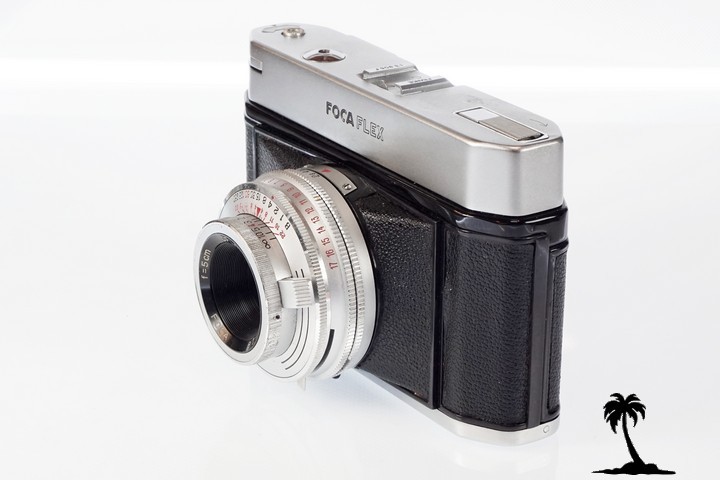
To summarize the difference between this SLR and others, here the top is flat, with no hump. The Brits had a different thinking with the Periflex, which used a drop-down periscope to capture the beam.
Good to know
- The model described in the user manual slightly differs from the one on my bench. It is the same model, probably another production run.
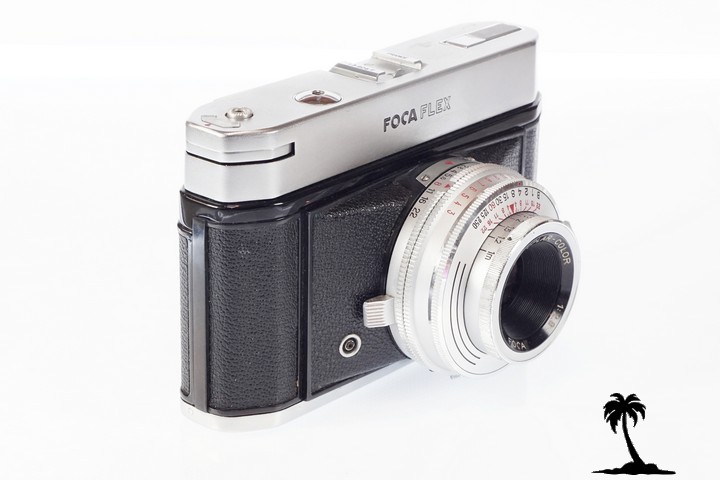
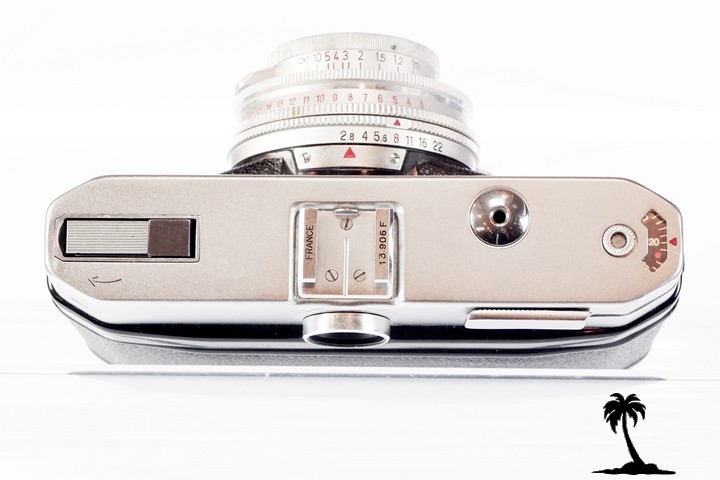
- The camera body has no protruding parts, levers or dials, as said, similar to the Werra.
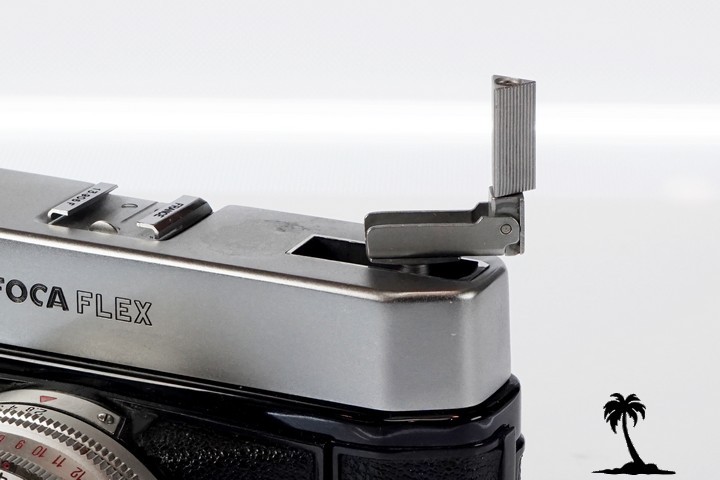
- The lever winder is flush with the body, yet is easy to purchase. It is a single stroke with a fairly long travel. When released, the lever does not rest fully flat, so it is ready for the next pull.
- The trigger button is generations ahead of time, blends with the body, and takes a deep press to actuate.
- The frame counter is manually reset. Push with your thumb and turn clockwise.
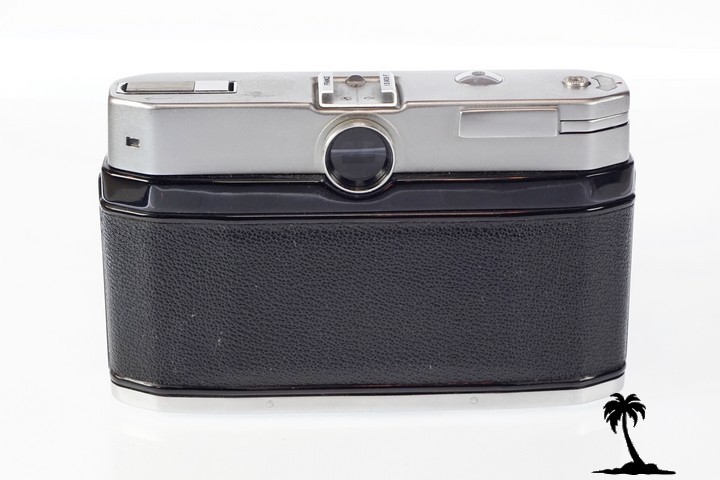
- On the cover’s back left is a tiny square window, showing a turning disk with film winding.
- The viewer could be larger and brighter, but clear enough for use.
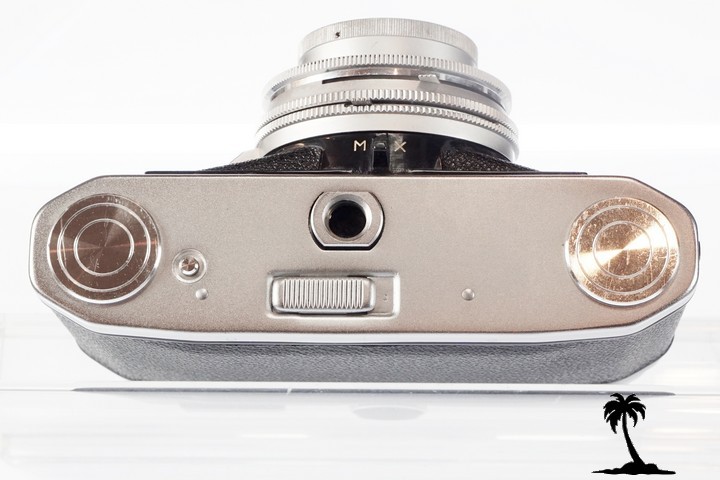
- The fully removable back is released via a thumb slider at the bottom. The mounting bushing is threaded into the body, much stronger than the same as part of the back cover. The fixed takeoff spool bay has a dual-sprocket film guide. A guide roller and a pressure plate are mounted on the back cover. A shy rewind release pinhead is at the bottom.
- The prominent lens assembly is clearly marked and a pleasure to handle. In most era cameras, the markings are tiny and faint; here, it is easy to read.
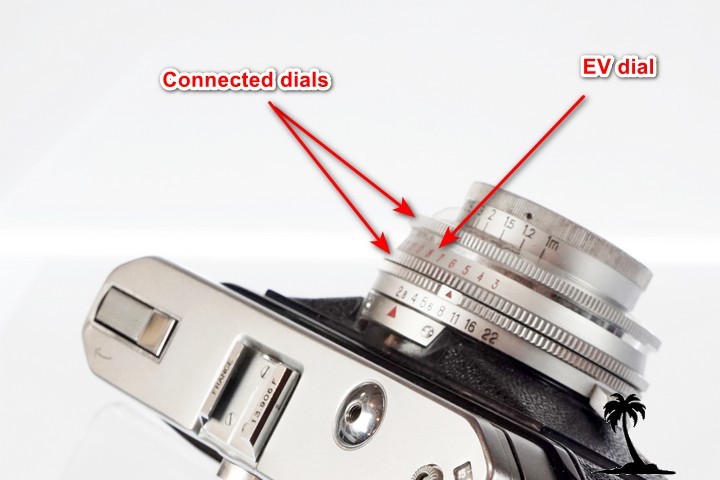
- The serrated aperture dial is closest to the body, with good positioning clicks. It had a finger rest, which could be mistaken for a focusing dial.
- The next dial is the shutter speed control. Here, they have added a neat option. The speed dial has two serrated rings, one in front, where the speeds are marked, and one at the back, which it is flush with the aperture dial. Once the shutter speed and aperture are set, you may turn the two flush dials together to retain a fixed exposure value. It is simple yet practical. There are similar options on other cameras, but all involve pulling one of the rings to uncouple.
- The speed offering is modest, B, 1 – 250. T can be achieved by using a remote trigger cord in the trigger knob.
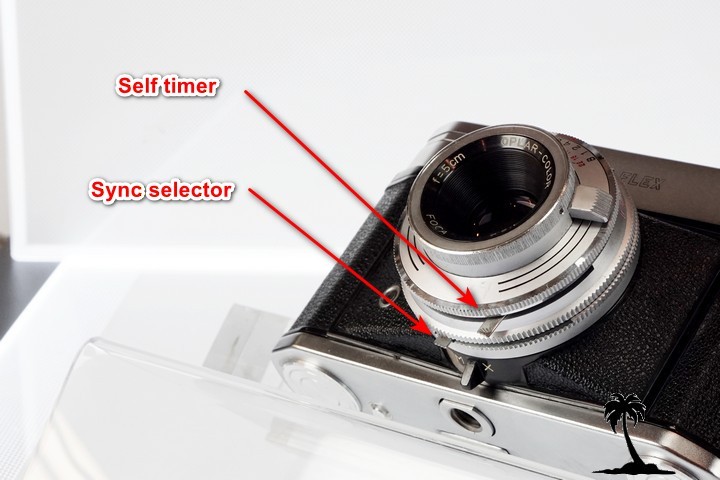
- A self-timer lever is below the lens, with no markings.
- The distance dial set at the front has a short travel, is nonetheless easy to focus, and has another finger rest.
- An X/M sync selector fin is under the lens.
- A PC socket is by the lens side.
For collectors, I highly recommend this camera. It is a unique, very well-made model from a country not known for excellence in this field. They do not come cheap, but they surely appreciate with time.
| Camdex list number | 17330 |
| Brand | OPL |
| Model | Focaflex |
| Manual | Manual machine Central manuals |
| Value | Focaflex Focaflex Automatic Focaflex II |
| Format | 35mm |
| Introduced | 1959 |
| AKA | |
| Country | France |
| Qty made | |
| Initial price | |
| Currency | |
| Type | Compact SLR |
| Body material | Metal |
| Mode | Manual |
| Weight | 690 gr, Body with lens |
| Class average weight | 790 gr, Body with lens |
| ASA range | N/A |
| Kit lens | 2.8/50 |
| Lens make | Oplar |
| Filter size | Slide on |
| Lens mount | Fixed lens |
| Mount size | N/A |
| Aperture | |
| Shutter | Leaf |
| Shutter make | Atoms |
| Trigger | On top |
| Winder | Lever |
| Shutter cocking | Lever on body |
| Light meter | None |
| Lock | No |
| Speeds | B, 1-250 |
| Mirror | None auto return |
| Viewer | Drop mirror SLR |
| DOF preview | Yes |
| Exposure lock | |
| Exposure compensation | No |
| Shoe | Cold |
| External sync | X/M |
| Sync speed | 60 |
| Timer | Yes, mechanical |
| Battery, original | N/A |
| Battery, replacement | N/A |
| Battery voltage | N/A |
| Integral flash | None |
| Other | |
| More | |
| Service / repair links | See camerlog.com |